Where I’m From

I stand in the line at Subway in Alberta, shifting nervously. Each time the young high school student asks me about which bread I want, which meat, or which vegetables, I am confused. I have never been asked these questions before. I don’t know what kinds of bread there are. They are on the sticker on the glass. He points to them. I scan them quickly, trying to hide my shame. I realize later that these questions are predictable, like driving a road you have been on before: you know the landmarks to look for before your turn. But I have never driven this road before. When you know what they will ask, the quick words spilling out of the mouth mean something. I don’t know what these words mean yet. I do not belong. 

I am playing on the beach by the Arabian sea with my siblings, building cities in the sand, as young ladies walk by trying to talk to us. Their hair and scarves blow in the wind as they giggle to each other. They pinch my cheeks, asking me my name – asking me where I am from. This is what everyone asks me. I stare down at the sand and continue my digging. If I ignore them long enough, they go away, usually. I do not belong.

I am in Kindergarten in a small school that is run out of a large house with just a few classrooms. I’m wearing the school uniform of a white shirt, grey shorts, white shoes, and everyone is staring at me. I am in the courtyard. It is lunch time and I am the only kid with white skin and blonde hair. The only one. My stomach is a tight knot, and I wish I could cry, but that would only bring me more attention. I do not belong. 

I am walking outside. I am all ages. I am almost anywhere. Look at the angrez,” the ‘English or white-people’ a child, or a parent, or an old lady or young man calls. Everywhere I go am angrez. Nowadays I want to tell this child I’ve lived here longer than he has. But I know the anger their words build in me is far stronger than any emotion that was put into those words. They are children. 

It is summer – the end of it, and I am riding my bike to my grandparents house. We have been in Canada for almost two months, moving from place to place, visiting family. The joy of ice cream, dill pickles, good burgers, real cheese, crunchy peanut butter, sweet corn, a community swimming pool, riding bikes around town and picking raspberries has begun to wear off. I miss my room in our house at home where we have to mop almost every day to keep up with the dust that collects everywhere, and the gentle thrum of the ceiling fan above my and my brother’s head as we sleep. I miss our little car port where my dad parks our old white nissan. I miss watering the plants on our flat roof, splashing water onto the ground so my bare feet don’t burn on the hot concrete. I am ready to go back to Pakistan. I do not belong here. 

I stand at the doorway to my dorm room in Saskatchewan, not sure how to ask my roommate. “Can you help me use the washing machine?” He is confused. I’ve never used a washing machine like this. He walks me though. He is patient and kind. I’m thankful I’m spared any further embarrassment. 

I am twelve. My parents are talking to someone in Sindhi. I am listening, not quite understanding the complexity of this adult conversation. I tug my dad’s sleeve. “What is he saying?” My dad explains. 

“He doesn’t speak any Sindhi?” They talk like I am not here, like I don’t understand what they are saying. I don’t argue because I don’t. Not all of it. Not enough. Not enough to be enough. I don’t belong.

I am walking along the street to go buy yogurt and some vegetables for our lunch. My mom has sent me out because she forgot to ask my dad to get the things when he was out shopping earlier in the morning. A couple kids shout “ching chong sheea cheecho”. This is apparently what Chinese sounds like to them. And they think I am from China. They have never seen a foreigner before. 

I am in Grade 8 in Canada. I do not know the English word for okra. I’ve never learned it. My classmates look at me like I’m crazy. I’m staring at the word now, spelled out on paper, letting it sink in. I catalogue the words I know where the Urdu comes first. Electricity. Market. Storeroom. Lentils. Flatbread. Tea. Why am I like this? I do not belong. 

I am twenty years old, sitting in a taxi on the way up the hill to my old boarding school for my sister’s graduation. I am overjoyed to be back in Pakistan to visit. Everything is familiar and strange at the same time. The evening air blows in through the open window of the small Suzuki Mehran. I am speaking to the driver in Urdu, talking about my time in Pakistan and asking him about himself. “Your Urdu is not very good.” I smile. Thank you? Do you say thank you to that? Only twenty minutes ago someone in the airport told me I speak Urdu very well. My ego had a short stint of happiness. It’s over now, as I look out the hills at the pine and spruce trees going by. 

I am standing at the post office asking to mail a letter. I am speaking Urdu, and I am thirty years old. The man is asking for my national identity card. I do not have one. I tell him but he doesn’t understand. I have a passport. I show him a photocopy. He is still confused. “But you have a CNIC card too, right?” He is not listening. I pull the blue passport from my pocket and place it on the counter. At last he believes what I’ve been telling him: that I don’t belong. But inside, I’m glowing. 

My wife and I walk through the bazaar close to our house. Our infant son is asleep at home and we are on a night out together. It is winter, I am wearing a chadar wrapped around my shoulders and she has her head covered. We eat street food and later step into a crockery store, looking at the various pots and pans, wanting to replace our pan that is quickly wearing out. The shopkeeper is a brusque bald man with little time for dithering. He knows his pots and pans. He asks us if we are from Gilgit (a city in the mountains of the North). I am so happy. My wife and I look at each other and smile. 

I am walking down the street, going to buy a few groceries from the store. No one looks at me. No one stares. No one does a double take. This is happiness. To be unseen is to be seen. To be unnoticed is to belong. Do I belong?

I am getting motioned over at an army checkpost on the way to the airport. The soldier asks me if I have foreigners in the car. Yes, I say. My sister, brother-in-law and their children are with me. I go with my brother-in-law to the small booth where an officer sits with a large ledger. I have my passport ready to show him. He asks for my brother-in-law’s. He does not ask for mine. He asks me where I am taking them. I say to the airport. He makes a call. He tells his superior officer of some foreigners passing through. They have a Pakistani driver. Yes yes, it’s all fine. They give my brother-in-law back his passport. I wait for a moment, confused, and then turn in delight. I am the Pakistani driver. 

I sit having chai at a chai shop, talking to the owner as he preps the lunch dishes they are making for the day. He knows I am Canadian. Another man sits, smoking a cigarette, chiming in on our conversation here and there. Near the end he asks if I am from Gilgit. I smile. No. And I am in heaven. 

I am walking down towards the house we are staying in for the summer. A teenager passes me on the road. “Hey bro.” He is trying out his slang with me. “Are you from China?” I laugh. This again? Has this guy never watched a movie?

“No.” I laugh. And continue on my way. He calls from behind me. 

“Where are you from?”

This question only gets harder these days. Canada doesn’t describe it. Sometimes if I’m feeling subversive I say Lahore, where we live now, but that’s only been the last four years. I feel deceptive if I say Pakistan, but in those moments when I doubt my claim, it seems strange that I can say I’m from a place that I’ve only spent ten years in, and really mostly in my adult life. And here I am, living more years in a place where I feel, inexplicably, that I am entwined with. So where am I from? 

I’m from never belonging. I’m from running down the sand dunes on the banks of the Indus and feeling the river is mine somehow. I’m from street food, and drinking chai, and buying fruit off carts on the side of the road. I’m from not looking women in the eyes, and from hugs before handshakes with men. But I’m also from liking my privacy, and not liking to talk about how much money I make when people ask. I’m from telling almost everyone I meet that no, I have no way to sponsor you to move to Canada. I’m from politely demuring from offers of chai by shopkeepers. I’m from loving bacon, and having to keep it a secret that I eat it, and from thinking and dreaming in English. I’m from needing a piece of paper every year from the government to let me stay in the country I spent most of my childhood knowing as my only reality. I’m from cherishing my Canadian passport as one of the most precious things I own – the first answer I give on one of those “what would you save in a fire” questions. 

I’m from this land, this people, this language, but I’m not. I am not Pakistani, but there is no me without Pakistan. You don’t live this many years in a place and not have it be a part of you – a part of the way you think and feel. When Pakistan went to war with India for a week in May of this year, an irrational nationalistic hatred pounced out at me from a place I didn’t think existed. When my wife asked if it wouldn’t be prudent to get a flight out to another nearby country until the political tensions relieved, I couldn’t explain to her that I felt like I couldn’t abandon this land I would almost rather fight for than leave. This feeling is the same feeling I felt a few days ago as I stood with my four year old and two year old sons on the way to the bus stop in the town nearby as two Pakistan Air Force JF-17 fighter jets roared in wide circles over the hills. These are our planes. I could feel it. When I stood in line with the kids I was coaching from my school during a tournament in Karachi, tears flooded my eyes as a video of the Pakistani national anthem played showing these scenes of mountains, rivers, people and places that were mine – that were threads of the cloth I was sewn from. This land is a part of me. As I drive in the mountains, or walk in the hills, or sit in the twilight of the city, or drink chai under a grimy fan, I belong. 

I sit on a rock in the forest right next to the path I run some mornings here in the summer, in the foothills of the Himalayas. The cicadas are buzzing in the trees, and birds flit from branch to branch as the morning sunlight slants in through the oaks and pines. I breathe in the smell of the forest: spruce, pine and leaves of the undergrowth. I know this place, and I feel this place knows me. 

I am sitting outside the Hungarian Embassy in Pakistan. I am there to get my citizenship verified. My grandmother happens to be Hungarian and only within the last couple years has my father realized he could have his citizenship as well. And now that he has completed his, my brother and I can complete ours. I am waiting to be called up to the window, sitting under an awning in the breeze of a pedestal fan. It is a hot day for Islamabad, the capital city. A young Pakistani man is sitting across from me in a maroon suit. I ask him why he is here. He is applying for a scholarship to study in a university in Budapest. He looks clean, professional, and nervous. “Are you Hungarian?” he asks. I am not sure what to say. I realize suddenly that I’m basically here at the embassy to say I am. And if this process can be completed, saying yes to that question will be perfectly true. How can I be Hungarian and not Pakistani? How can I truthfully be allowed to be from a place I have never lived and don’t speak a single word of the language, and yet feel I can’t lay claim to a place that has been the home for three generations on my mother’s side, and a land has clothed, fed and raised me for twenty two years of my life? 

I am thirty-two. I am carrying bags of gravel from the trunk of our car to the parking area of the guesthouse we are staying at. I have just driven down to a spot outside a collection of shops and houses where an old man is sitting on a seat cushion laid on top of a stone wall, smoking a cigarette. He greets me with a smile and we talk about the per-foot cost of gravel and about memories from Murree in the years passed. While we talk, a young man shovels five cement bags worth of gravel and helps me load them into my car. Back at the guesthouse, I rake the gravel across the front half of the lot where the mud collects in the monsoon rain. Three young boys walk by the chain-link gate. “Hello,” they say in English. I smile at them. “Where are you from?” They ask. They are about the age of the kids I teach at school. I speak in Urdu. I tell them I’m from Canada, but I live and teach in Lahore. I ask them where they are from. 

“Peshawar,” they say with some pride in their voices. I ask them if they are visiting for long, and if they are staying in the apartments down the road. They say they are here for another week or two. I ask them if their schools are starting soon. I tell them mine begins next week. They all have different start times. There is no anger. There is no frustration. I am still raking the gravel between the conversation, and they smile and begin to move on down the road. “See you boys later,” I say. And that is that. There is no shame. There is no deep questioning of myself and of my place in this world. I am simply myself. 
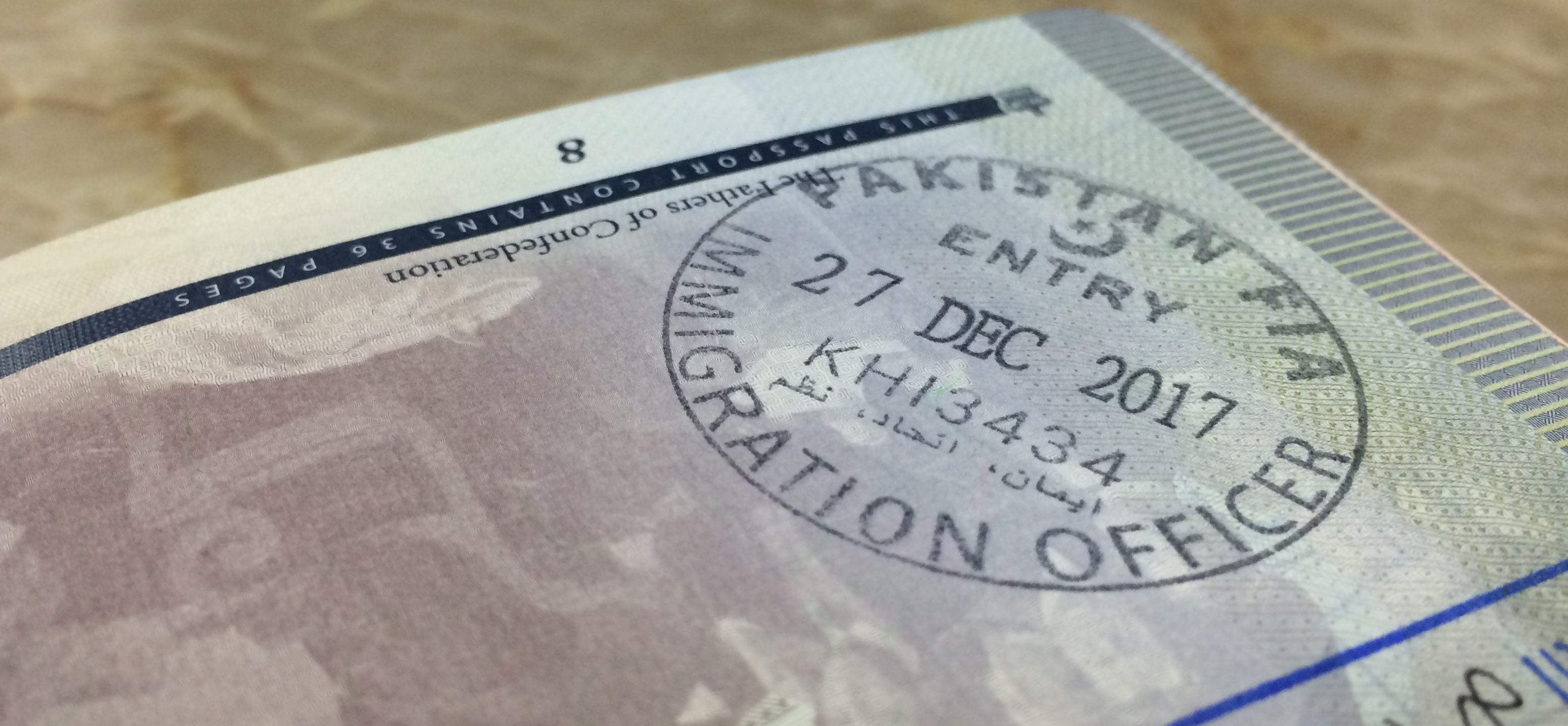
Reflection

img_2227-e1514640220926.jpg

“What do you do?”

“I’m a teacher,” I answer, looking past the counter to my reflection in the dark floor-to-ceiling windows behind the immigration officer. A teacher? Really?  The person in the reflection looks like he could still be in high school, maybe. I wonder if that wasn’t about how I looked when I left nearly six years ago. A teacher already. When did that happen?

“What do you teach?”

Looking once more at the reflection I’m surprised anyone could buy my story. A little young, don’t you think? They let people your age into the classroom?

“English, History and PE.” I’m not about to explain what Social Studies is. I seem small in the reflection — my usual kamzor, skinny self. I’m going to hear it from the people I meet. They’re always convinced I’m wasting away in Canada or something. Not that I mind that much. It usually just means I get pushed to eat more while I’m here, which is a pretty good problem to have.

“This is this your first time to Pakistan?”

I almost laugh, but I’m too tired to, and I’m not sure he’d find it funny. “No.” How do I even begin to explain? “I’ve been here many times before. I grew up here.” I wonder why he can’t pull me up on their system or something and see how many times I’ve been there. Surely they have the technology for that. Who knows.

He asks me my exact address in Hyderabad. I can never remember it. It’s way too long and complicated, and all I’ve written on the entry card is the name of the “Phase”, the neighbourhood, the city, and the province. Lived in basically the same house for almost eighteen years and I still don’t know the address? Seriously? Drop me off at the highway though and I could find my way to it.

He tells me he’d actually been to the area of my city just the other day for a wedding. I smile. We’re over that hump of feeling like my life is being scrutinized like an weak alibi. He stamps my passport and hands it to me. I smile and thank him, and my reflection turns past the counter and heads toward the baggage claim. I don’t think the jeans help. They make my legs look thinner.


At home, the doorbell rings. I open up the gate for Shanti, the lady that works for us — who’s basically an aunty to all of us kids. She hugs me, asking me how I’m doing. She smiles and adjusts her dupatta as she steps back and takes her shoes off. “You’re so skinny!”

Coming Back


above-1839587_1920

I sit on a plane, passing over the cold, northern part of Russia, wondering what it will be like to be back home again. I wonder what it will be like to go back to the familiarness of a world that, in many ways, is so forgotten in my day to day life in Canada.

I wish I had Michelle with me. Somehow going on this trip to revisit Hyderabad once more before the door, to the house at least, is closed forever feels like it’s taking me back into my childhood. Being alone seems to make it all the more a pilgrimage into my past, without my wife, and without any part of my Canadian life with me. I do the trip the same way I’ve done it so many times. It’s hard, but it seems fitting somehow.

The fact that the trip came together so quickly only makes the journey seem more automatic and routine. I’ve missed the anticipation and build-up that normally comes with a trip like this. It isn’t strange or abnormal to find myself navigating through airports alone over Christmas break. It seems second nature. In so many ways it feels like all the times I flew home to visit family over my breaks in high school.  Only this time I have a wife in Colorado that I’m away from, and a life in Canada as a teacher, with responsibilities and classes, and students who struggle to even begin to understand this — this part of me.

Sure, I talk about Pakistan sometimes. They ask questions about what it was like, and we make jokes about serious things like terrorists, or we talk about what the weather was like, or whether it felt dangerous, or whether I was scared; the usual. We laugh, and I move on. Life goes on. And so much of my life I live without giving any of it a thought. I wake up, scrape the ice off the windshield as the car heats up, and drive to school, teach, coach, laugh, talk, come home, relax with Michelle, work, sleep, repeat. There’s no room for this. There’s no room for all that’s in my head sometimes, even though I don’t realize it’s there until a time like this — the self-absorbed soul-searching and questions about my identity; the questions about where I fit in with all of this. And now that I’m married, about where a duo of mixed up internationals fit into the complicated world they live in.

So I put up a little Pakistani flag on my bulletin board, share some stories, make some jokes, and then go on fitting into to where I appear to fit so well. It’s not that I’m trying hard to fit in, or trying not to. It just happens. Pakistan lies dormant inside me, like a dream that I’ve had enough times for it to feel like reality. It’s just that in times like these, as my plane cuts through the cold Russian sky, nose pointed toward Beijing, that I wonder which life is more the reality, and which is a more the dream. Only maybe it doesn’t have to be one or the other.

The Life Between the Line

pencil-1692531_1920I remember my parents making fun of my brother, Stephen, for how terrible he was at communicating when he was in boarding. They always said, “It’s difficult to read between the line,” because there was only ever one, in his emails. He’s never been a man of many words when it comes to writing.
As I look back on the past several months, I wonder if my parents are saying the same thing about me. I think about the amount of short ‘one-liners’ I’ve sent off to my parents or friends lately. I know I mean well. I’m always wanting to set aside a good chunk of time at some point to write a proper email and give a more full picture of things, but it usually doesn’t happen. My all-or-nothing approach with emails usually means people either get emails that resemble text messages, or nothing at all. I’m still waiting for that time when I decide to sit down and write out a proper email.

Unfortunately, so much of life happens between the lines. So many of the thoughts we have throughout the day, or the experiences we go through, never quite make it out to the people who want to hear all about it. I realize this even with Michelle each day, as things get missed or forgotten. And it’s always the craziest or best stories that are the hardest to relate. Some of the biggest lessons, impressions, and insights seem to fall into the blank silences between the lines, as words so often fail to express the beauty and complexity of these moments.

As everyone knows, it’s often when more things are happening in life that communication gets harder and harder. And as the schedule fills up, the conversations are pushed to the sidelines. It doesn’t mean that the conversations become secondary, it just means that as the quantity of story to tell increases, the motivation to tell it decreases. Before you know it, life becomes “a long story” that you hardly ever have time to tell, with all the backstory, prefaces and appendixes to everything that makes up our experiences.

That is, I suppose, the nature of life. So much of it is unexplainable and passes by in a beauty and chaos that can’t quite be captured in words. And yet, it also begs to be described and communicated. As the writer, Thomas Mann noted, “A writer is someone for whom writing is more difficult than it is for other people.” And I’m sure, in the same way, it’s the most beautiful moments, of life that art and artists struggle to put to canvas, or to capture with a camera. It’s impossible.

Life is an unpaintable model. However, you may read between the lines in this post, and realize that I do need to work on my communication. I’m a procrastinator at my core, I think— especially when it comes to written communication — always waiting for that perfect moment to start something, when nothing else is getting in the way. But everything always gets in the way. And so, this is part of my effort at doing a better job — choosing to start, and put words on paper; choosing  to try to capture the fleeting moments of life.

Some Things I Learned in School

It’s seems like an eternity since I’ve really been able to stop and catch my breath. Stepping into the changes of married life, and into a new season of our lives in Three Hills, things have felt a little crazy for Michelle and I. Many days I’ve felt like Alice in Wonderland, running as fast as I can just to stay in place. And if I want to get anywhere — to get anything done besides the day-in-day-out job of staying afloat as a teacher, I have to run twice as fast.

Getting to be a full-time teacher for a whole semester has been so good for me. And now, with my contract for a maternity-leave over, I’ve become a substitute teacher, which has been an interesting transition in itself. For the first time, since I started teaching in September, I’ve been able to properly step back and look at how things panned out over the semester. I see the things I didn’t do as well as I could have, and the things I’m proud to have done. I see some of the kids who I never got through to — who were glad to have me leave (or said they were), and I see the kids who connected deeply, and whose confidence and motivation is more than I could have ever asked for as their teacher.

Teaching has changed me. I look back at the idealistic and revolutionary high-schooler that started into university, wanting to change the world and the face of teaching into the amazing thing it could be. I saw all the failings of the education system, and I wanted to fix it all. I wanted creativity, choice, flexibility, inquiry and imagination, and somehow I thought I knew a lot of the answers (or at least thought I’d be able to find them if I tried).

I do still want to see these things in teaching, but I’ve come to realize that the process of getting there, what that looks like in the classroom, and how students receive all these things is vastly different than I imagined. I’m not looking for a magic formula for educational perfection, and I’m not hoping for a quick and drastic revolution in the education system.

I believe more than ever that school should be a place of imagination and creativity — but school isn’t perfect. It’s easy to work myself into the mindset that, if we could only get the right ingredients, school could be this amazing space of ingenuity, problem-solving and curiosity, where kids love to come and learn, try new things and create. But somehow in all my wonderful ideas of what school could be, I forgot that school isn’t just made up of programs and ideas. It’s made of people. It’s made of students who have times when they really don’t care about learning. It’s made of teachers who have times when they are so overwhelmed and exhausted, they do all they can just to put one foot in front of the other each day. School is full of all kinds of problems, and is expected to solve most — if not all of them — and to do it gracefully and quickly.

So here are some things I’ve learned while being a teacher.

Teachers really want to make a difference. In the conversations I’ve had with fellow teachers and administration, the time I’ve spent with future teachers in university, and the sharing of ideas, plans, resources and all kinds of other teachery things, I have been been overwhelmingly impressed by the amount of really caring, amazing people there are in classrooms around the province and the world. It’s easy sometimes to feel pretty self-centred, working away at making a difference for the kids in your classroom, especially when that work is so consuming you can barely lift your head to look around you. But when I’ve had a chance to look at the things other teachers are doing in other schools, or things I hear in the frequent conversations with my colleagues, I very quickly realize that there are an incredible amount of people that selflessly pour themselves into the kids they teach. They work hard and late, and they genuinely care about the kids that come through their door each day.

Education bashing is a global pastime that doesn’t really help anything. I used to really appreciate a good Youtube video or Facebook post about how schools stifle the things that matter in life — about how the model of school is still stuck in the Industrial Revolution era, and about how one size doesn’t fit all, or how many times school has failed people, how schools shouldn’t be factories etc etc. But having been in one for the past five months as a teacher (and all the other years as a student), bashing school as a system has increasingly lost its appeal. I see some of the blood, sweat and tears that I talked about earlier, and I see how sometimes kids take the nicest teachers, with the best lessons and ideas, and throw everything back in their face with an apathetic eye-roll. I understand that everyone has something to say about education, because almost everyone has gone through it, and that there are lots of things that could be different about schools, but I’m continuing to learn that change takes commitment, patience, resilience and hard-work, and throwing tomatoes at the education system on social media doesn’t fall into any of those categories. I know the education system isn’t perfect, but there are a lot people around the world trying to make it the best it can be, and they feel better when you cheer them on.

People aren’t perfect. Schools are full of people. Waiting for education to be all I’ve ever dreamed that it could be is like waiting for Liverpool Football Club to win the Premier League. It hasn’t happened in my lifetime. There are moments when the right things come together — a string of passes and choices seem to gel together to make something magical, just like those moments when enthusiasm is high, kids are getting concepts and are excited to learn. And then, out of nowhere there will come some crazy mistake — half of the defence seems switched-off as the ball thumps it’s way into the back of the Liverpool net, and yet another game ends in a disappointing defeat to some low-level team. In the same way there are days and moments where things just don’t work out. Misunderstandings occur, plans fall flat, distractions steal the crucial teachable moments, motivation has somehow disappeared from the entire room, or attitude, emotion and frustration cloud choices and activities. Teachers, students and parents, all come with their own set of problems and failings, and when they all work in close-proximity for ten months at a time, things don’t always happen the way you would hope. While I’m holding onto the hope that I get to see Liverpool raise the Premier League trophy some year, I know I’ll probably never see perfection in the education system — at least not as long as it continues to be filled with people.

As I look at some of these things I’ve learned, I can’t help but wonder if I’m a little pessimistic. Have all my ideals just been replaced by a “things are fine the way they are?” But that’s not what I think. I want education to be the best that it can be, and I want to try new things and for schools to continue to take risks and make changes. I believe in schools. I believe in teachers. I believe in kids. And I believe in parents. We each bring our own problems and failings to the table, and school is the place I get to see them all come together. While that can make for a messy combination, it can be beautiful at times.

Despite the few students who I look at, and I feel like I failed, as they continue to see school as an authoritarian, broken and stifling institution, I have to allow myself to see the other students as well — the ones who beam at me in the hallways, who tell me about their days, who get excited when I come to watch their hockey games, or whose humour and creativity in Social Studies projects makes me smile. I remind myself of the deep literary conversations I’ve had about Batman, or the times when a student tells me they decided they’re actually going to try at their work this time (after a couple months of not doing that), or when someone tells me they were so excited about the stop-motion animation we were doing in class that they went home on the weekend and spent a good part of their Saturday making one at home with Lego.

It’s far too easy to let failings overshadow the successes, but it’s the successes (in the face of failings) that motivate the desire to try for change , and to continue to work hard at making things better — to give my very best to the kids I’m entrusted with, to refine and improve my teaching, and to continue to invest in making school what it is and can be for kids.